Merino versus cashmere for private-label scarves
Two fibres dominate the premium scarf category. The better choice depends on the price point, not the label.
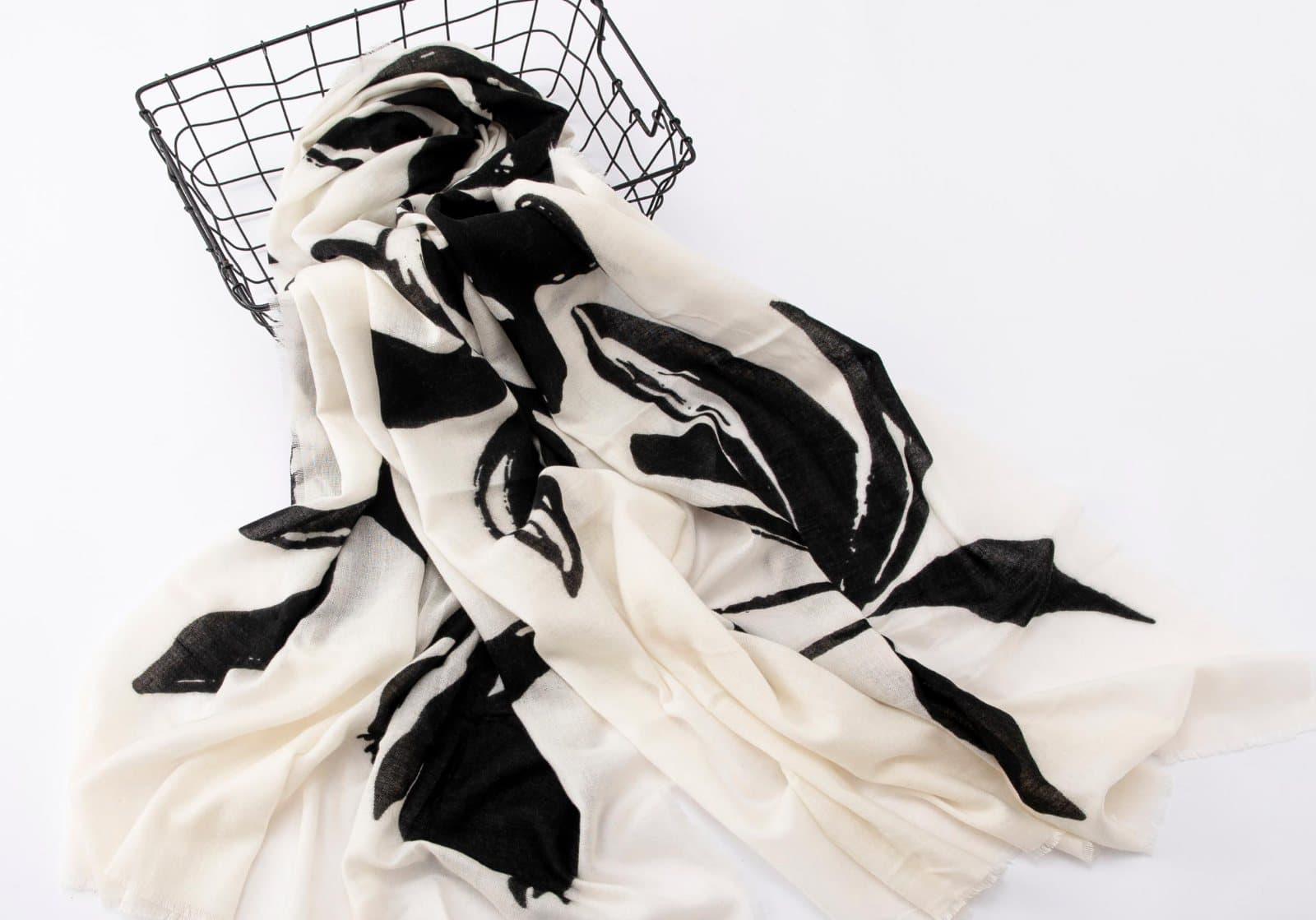
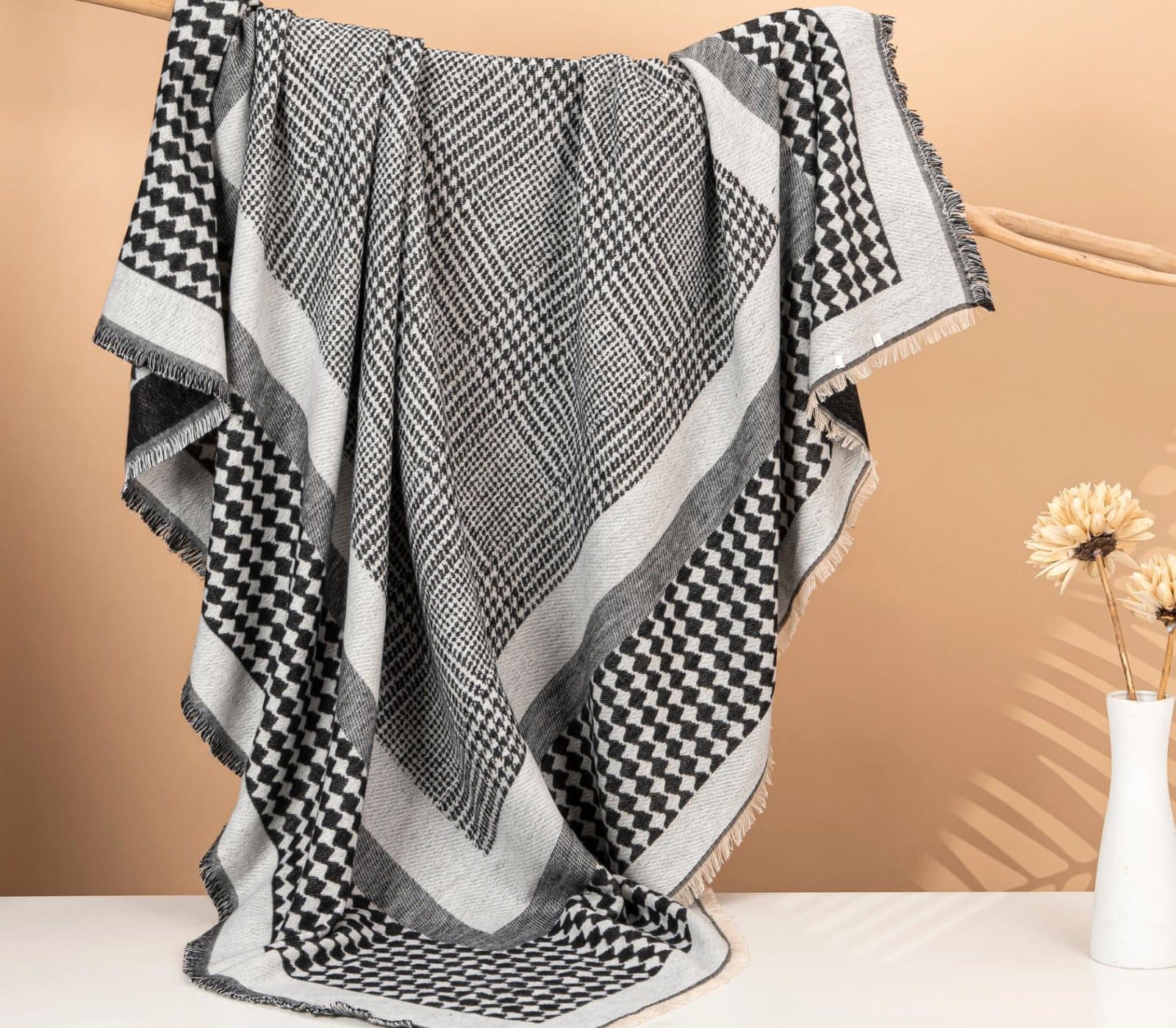
Merino and cashmere are both marketed as premium, and buyers often treat them as interchangeable. In practice they behave very differently in a scarf programme, and the difference shows up in the cost sheet, in the hand feel and in the return rate.
Merino wool
Merino is finer than standard wool but not as fine as cashmere. It is durable, washes more readily, holds a dye more evenly and costs materially less. For a scarf that will be worn outdoors, washed frequently, or sold at a mid-market price point, merino is usually the stronger commercial choice.
Cashmere
Cashmere is finer and warmer for its weight, with a distinctive halo that softens with wear. It is more expensive, and it needs a gentler wash. Length matters: the same cashmere blend in a 180 cm scarf uses roughly twice the yarn of a 70 cm version, so the fibre choice and the size decision should be taken together.
Blends
Blending cashmere with viscose or merino softens the hand and lowers the cost while keeping a visible cashmere content on the label. It is the standard route for brands that want the cashmere perception at a mid-tier price point. Blends are also the most common way to hit a target landed cost while keeping the specification credible.
A practical way to start
Order a strike-off in at least two fibre options and compare them under retail lighting, not under factory light. Most of our buyers settle the question in ten minutes on a physical sample.